The Capital Fundamental Five: 5 Strength Movements Every Beginner Should Master
Nobody wants to waste time in the gym. You want your workouts to make you stronger, improve how you look, and help you move better outside the gym.
But before you add more weight, you need to answer a more important question:
Can you control the fundamental movements that heavier strength training is built on?
At Capital Strength, our personal trainers use a simple movement assessment during new-client intro workouts. We call it the Capital Fundamental Five:
- Squat
- Push-up
- Hip hinge
- Inverted row
- Plank
These movements give us a practical look at lower-body mobility, upper-body strength, core stability, coordination, and control. They also help us choose the right exercise variation and starting resistance for each person.
The assessment is not about proving how fit you are. It is about finding the most productive place to begin.
What are the five fundamental strength movements?
The Capital Fundamental Five are the squat, push-up, hip hinge, inverted row, and plank. Together, they represent the basic movement qualities needed for most strength-training programs: bending the knees and hips, pushing, pulling, hinging, and stabilizing the trunk.
When you can perform these patterns with control, you have a better foundation for progressing to exercises such as goblet squats, barbell squats, bench presses, deadlifts, cable rows, and pull-ups.
Here is what our coaches look for in each one.
1. The squat
The squat is one of the most useful movement patterns in both the gym and daily life. You squat when you sit in a chair, get up from a low seat, pick something up, or lower yourself toward the ground.
A strong squat develops the thighs, glutes, hips, and trunk. It can also help you maintain the lower-body strength and physical capability you want for the rest of your life.
What we look for
During an intro assessment, we look at whether you can:
Keep your feet stable on the floor
Sit down between your hips with control
Keep your torso and spine in a strong position
Reach a comfortable, useful depth
Stand back up without losing balance or position
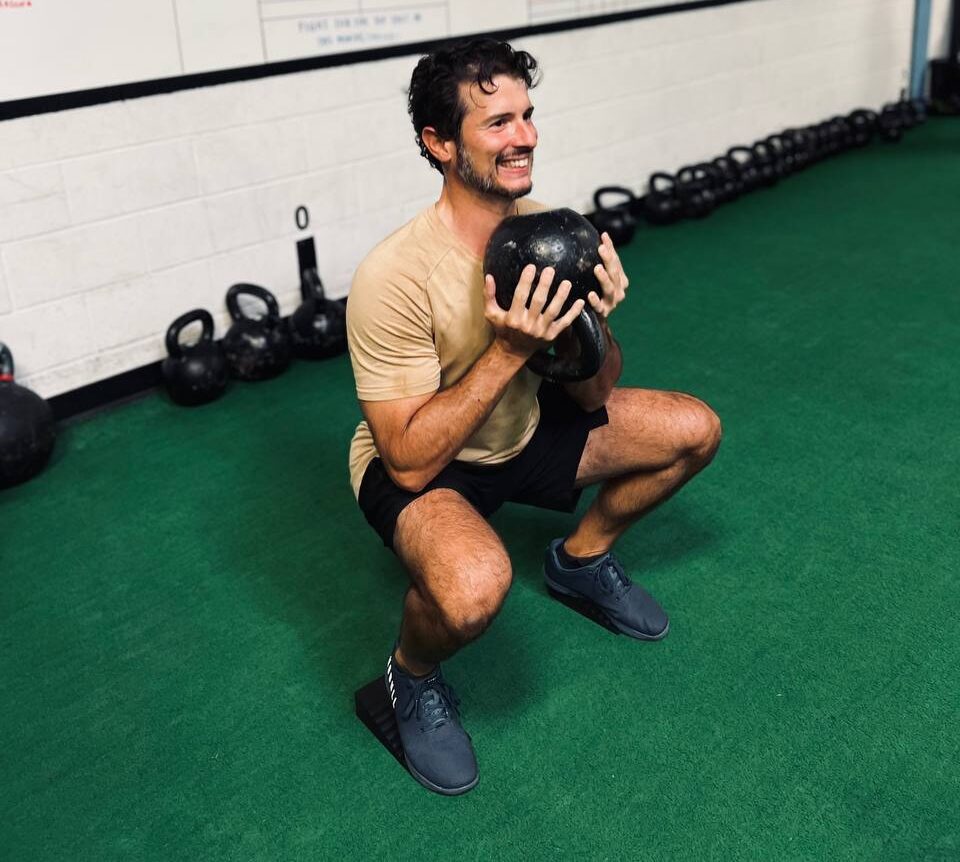
For someone with the mobility and structure to do it comfortably, a full squat may place the crease of the hip below the top of the knee. That is a useful benchmark, but it is not a requirement we force on every body on day one. Your starting depth should be pain-free and controllable.
If bodyweight squats look strong, we may add a light kettlebell or dumbbell and watch how the pattern holds up for five to ten repetitions. From there, you may be ready to progress toward heavier goblet squats or a barbell variation.
If you are not ready, we can begin with a box squat, supported squat, or a shorter range of motion and build from there.
2. The push-up
The push-up is more than an upper-body exercise. It combines pressing strength with shoulder movement and core stability.
A strong push-up requires your chest, shoulders, triceps, trunk, and hips to work together. Your body should move as one connected unit rather than your hips sagging or your head reaching toward the floor first.
What we look for
We want to see:
A stable position from your head through your hips
A braced midsection
Elbows and shoulders moving with control
The chest lowering toward the hands
A strong press back to the starting position
Shoulder blades moving naturally around the rib cage
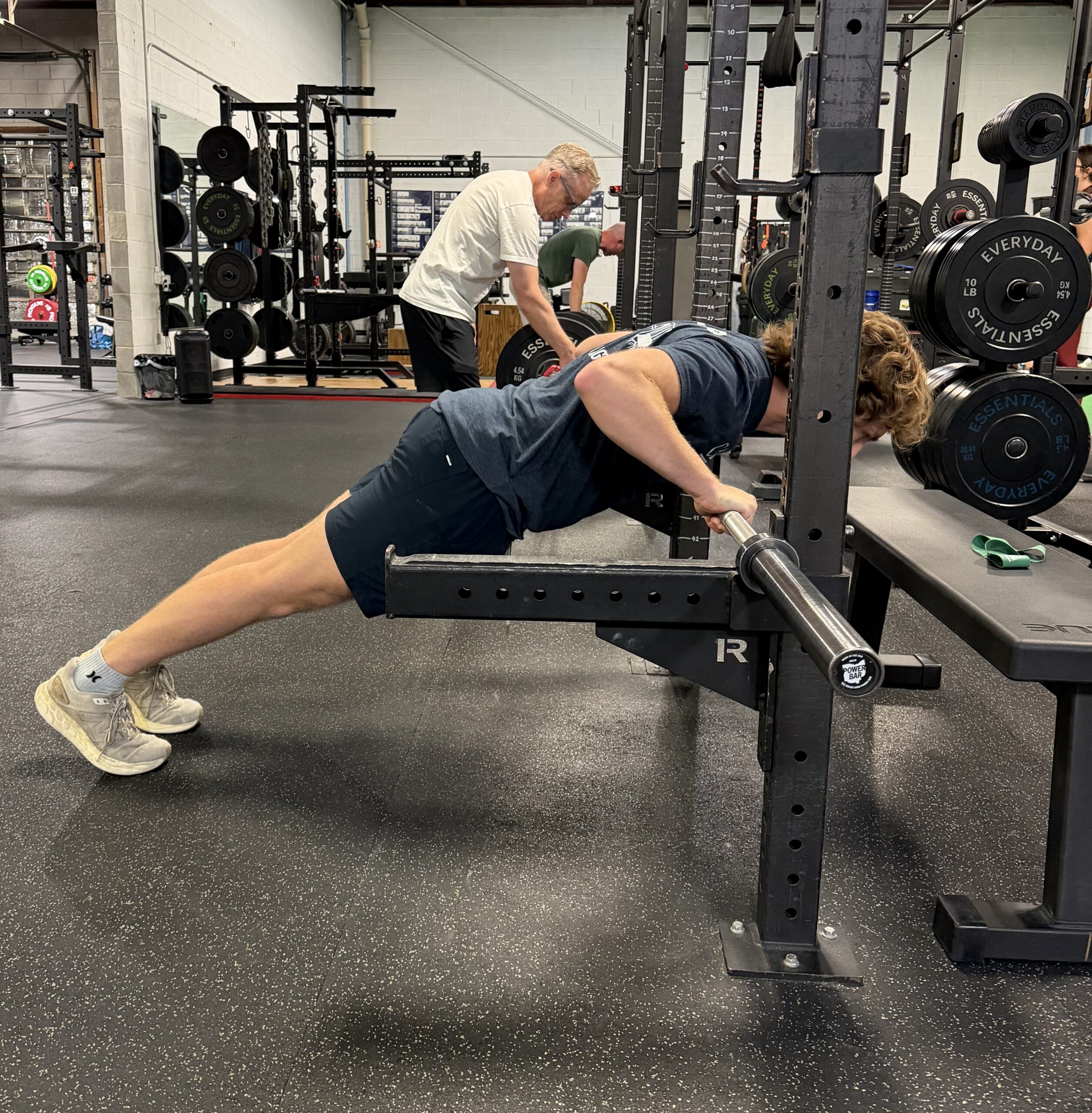
If you cannot perform a full push-up from the floor yet, that is completely normal. We often use a rack push-up, with the hands elevated on a barbell, bench, or rack. Raising the hands reduces the resistance while preserving the push-up pattern.
As you get stronger, we gradually lower the hand position until you can perform strong repetitions from the floor.
3. The hip hinge
The hip hinge is the foundation of the deadlift. It teaches you to bend primarily through the hips while keeping the weight close and the trunk braced.
You use a version of this pattern whenever you pick up a heavy object from the floor. Training it correctly builds the glutes, hamstrings, back, and core.
What we look for
A strong hinge usually includes:
Hips traveling backward as the torso inclines
A controlled, stable spine position
Tension through the hamstrings
The weight staying close to the body
Hips driving forward as you stand tall
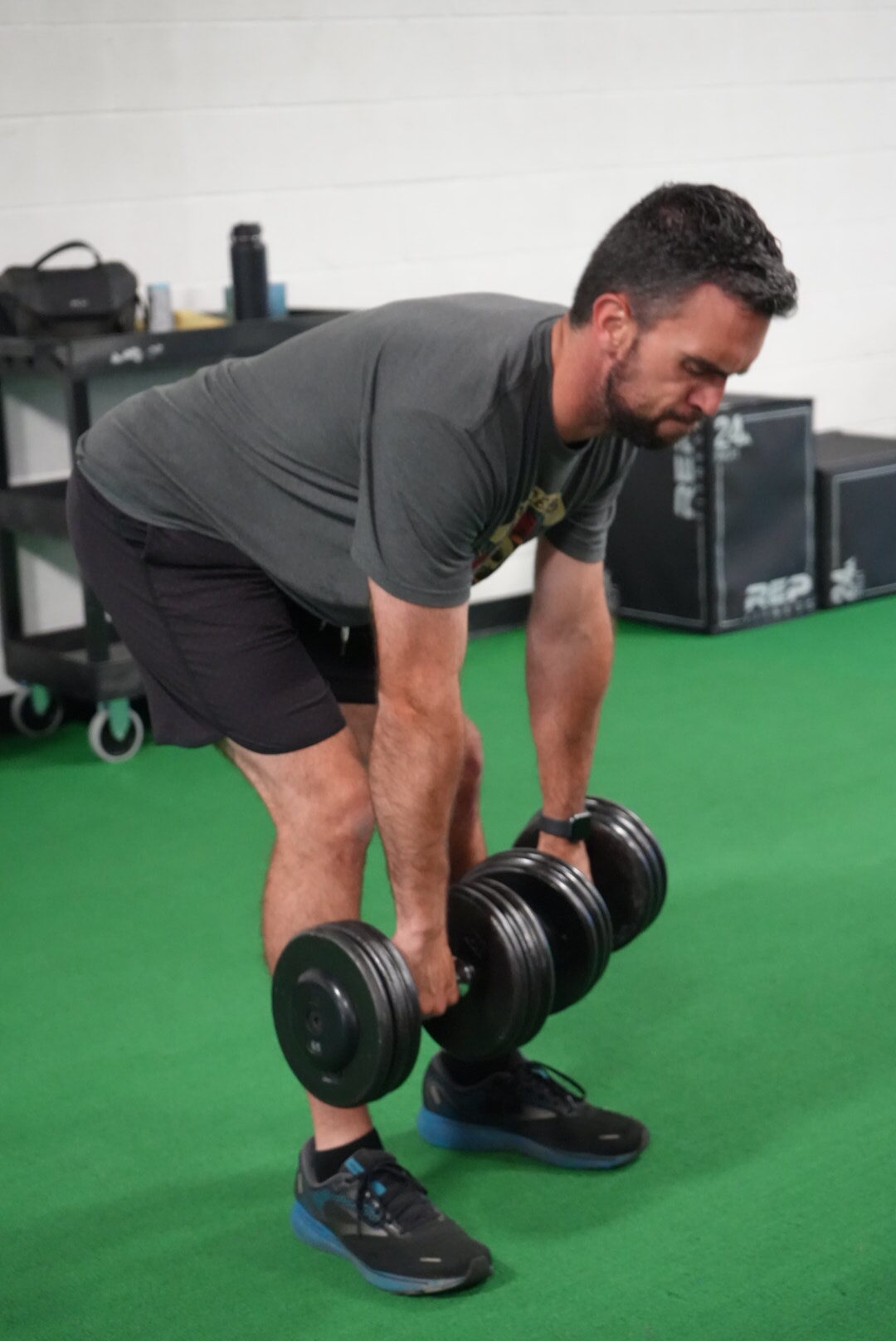
One cue we use at Capital Strength is “hang on your hamstrings.” You should feel the hamstrings accept tension and support the position as your hips move back.
We may begin with a dowel, a light kettlebell, or an elevated deadlift. Once you can control the pattern under an appropriate load, you can progress toward heavier kettlebell and barbell deadlifts.
4. The inverted row
The inverted row is a bodyweight pulling exercise. It can be performed with gymnastics rings, suspension straps, or a barbell secured in a rack.
The more horizontal your body becomes, the harder the movement is. This makes the exercise easy to adjust for different strength levels.
What we look for
During a row, we want to see:
A stable body position
The knuckles moving toward the chest or ribs
Elbows traveling back under control
Shoulder blades moving back as the elbows move back
No shrugging, collapsing, or reaching the head toward the handles

The row builds the upper back, arms, grip, and shoulder control. It also prepares you for more advanced pulling movements. Rows use a mostly horizontal pulling path, while pull-ups use a vertical one, but both depend on coordinated movement of the arms, shoulders, and trunk.
If the row is too difficult, we simply raise the handles or bar and make your body more upright. As you get stronger, we lower the setup to increase the resistance.
5. The plank
The final fundamental is core stability. We often assess it with a plank from the hands or forearms.
Your core's job is not only to create movement. It must also resist unwanted movement, stabilize your spine, and help transfer force between your upper and lower body.
What we look for
In a strong plank, you should be able to:
Keep your ribs and pelvis controlled
Lightly tuck the pelvis rather than letting the lower back sag
Squeeze the glutes
Brace the abdominal wall
Maintain normal, controlled breathing
Hold the position without losing alignment
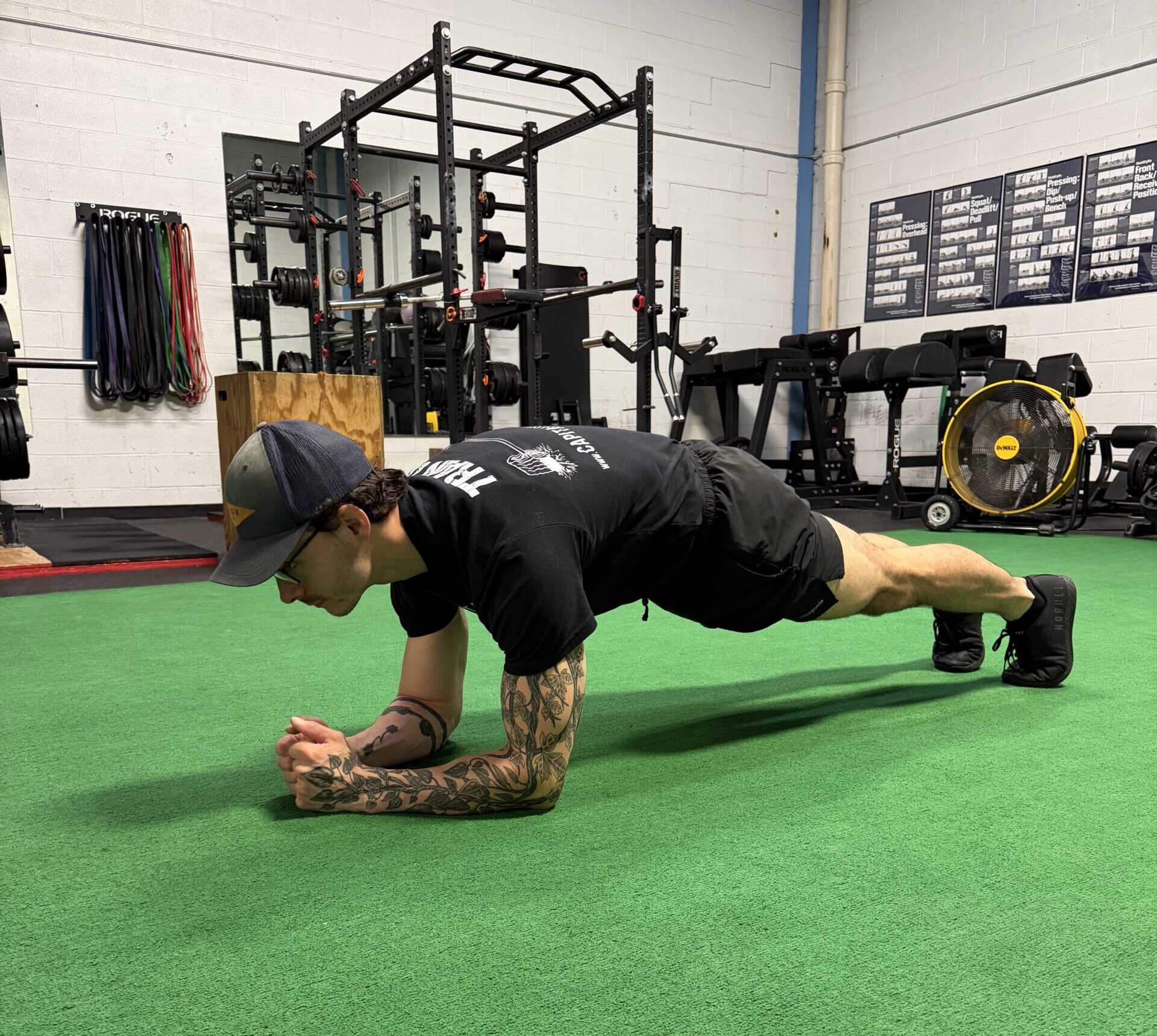
A controlled hold of roughly 30 to 60 seconds is a useful general benchmark. Quality matters more than chasing a longer time. Ten to twenty seconds of true tension is more valuable than a minute spent hanging on your lower back.
What if you cannot perform all five movements?
You do not fail the assessment.
The result tells us what your body needs next.
You may need a different range of motion, a more stable setup, less resistance, more practice, or a variation that fits your current mobility and injury history. A skilled coach can modify almost every fundamental pattern without abandoning the purpose of the exercise.
That might mean:
Squatting to a box instead of below parallel
Performing push-ups with your hands elevated
Starting a deadlift from raised blocks
Making an inverted row more upright
Using shorter, higher-quality plank holds
These are not lesser exercises. They are appropriate steps in a progression.
Why a movement assessment makes strength training more effective
A productive strength program must do two things at once: challenge you enough to create change and fit your current ability well enough that you can train consistently.
Starting too aggressively can make technique fall apart. Starting too cautiously can leave you spinning your wheels. A movement assessment gives your coach useful information for selecting exercises, setting an appropriate starting load, and creating a clear path forward.
At Capital Strength, we use the Fundamental Five to answer three questions:
What can you perform well right now?
What needs to be modified or coached?
What progression should come next?
That is what we mean by training up. We meet you at the right starting point, teach the pattern, add resistance when you are ready, and continue progressing as your strength improves.
Start strength training at the right level in Raleigh
You do not need to master all five movements before working with a personal trainer. Teaching you how to perform them is part of the job.
Capital Strength is a private gym for personalized strength training in Raleigh, North Carolina. We offer 1-on-1 and semi-private personal training for people at every fitness level. Your workouts are tailored to your goals, experience, mobility, and starting ability.
During your Free Intro Session, we will learn about your goals, see how you move, and show you the most useful place to begin. There is no pressure to join and no expectation that you arrive already fit.
Frequently Asked Questions
What are the five basic strength-training movements?
The Capital Fundamental Five are the squat, push-up, hip hinge, inverted row, and plank. They assess the basic qualities behind lower-body training, pushing, pulling, lifting from the floor, and stabilizing the core.
How deep should a beginner squat?
A beginner should squat as deeply as they can while keeping their feet stable, maintaining control, and staying pain-free. Below-parallel depth can be a useful goal for some people, but anatomy, mobility, training history, and comfort all affect the right starting depth.
What should I do if I cannot perform a floor push-up?
Use an elevated push-up with your hands on a rack, bar, or bench. Choose a height that allows your body to stay braced while you complete controlled repetitions. Lower the hand position gradually as you get stronger.
How long should a beginner hold a plank?
Start with a duration you can hold with good alignment and controlled breathing, even if that is only 10 to 20 seconds. Build toward 30 to 60 seconds, but stop the set when your hips sag or you can no longer maintain tension.
Do I need to get in shape before starting personal training?
No. A good personal-training program begins at your current ability level. The coach should modify the exercises, teach the necessary skills, and progress the challenge as you become stronger.
What happens during a Capital Strength Free Intro Session?
We learn about your goals, discuss your training history, look at how you perform important movement patterns, and identify the right starting point. You can see the private gym, meet the team, and get expert direction without any pressure to join.